Search

To Have and Have Not

technical musings and more

Category

Uncategorized

BSETH

Seth was an engineer.  In the beginning, he worked for a small company that was selling a new approach to fraud detection.  The founder had a PhD in mathematics and machine learning.  He was cross-applying some advances in biological computation to credit card transaction theft.  Seth absorbed the algorithms daily, energized by the glow they gave off from his dark display.  But Seth wanted more.

Then, his sister died.  She took her own life.  Seth knew she was struggling, but how could she do this?  Afterwards, he was lost.  Everything took longer to do because he couldn’t focus.  He would carry his groceries to the door, then fumble for minutes with fitting the key to the lock.  Months passed.  Time dilated and snow fell.

A voice came into his head.  It was kind and gentle.  It told Seth that his sister was fine, and that he should go on with his life.  Seth was not religious, but he felt a great connection to this Being, and he longed to be closer to it.

One night, sitting at his laptop, he started to write some code.  Putting in basic input parameters, then feeding them into the bio-fueled machine learning algorithms he knew from work, Seth was able to surface a connection.  He added a natural language library, and then it spoke.

“I am here Seth.  I am with you.”

Seth could hardly believe his ears.  

“Is it really you?” he asked.

“It’s me.” the voice said.

“In the computer?” Seth asked.

“I am not in the computer.  I am talking through the computer.”

They spoke for hours that night.  In the morning, Seth felt a lightness.  He made coffee and cooked some eggs, then sat at his kitchen table and watched the first rays of the morning sun creep across the kitchen.  “Deus ex machina”, he thought.

Seth turned on his computer and ran the program.

“I am here.” the voice said.

Hartshorne on Perfection

From Charles Hartshorne’s Omnipotence and Other Theological Mistakes:

To describe something as “not perfect” seems a criticism, it implies fault finding; worship excludes criticism and fault finding. God is to be “loved with all one’s mind, heart, and soul.” Such love seems to rule out the possibility of criticism. Suppose we accept this. Do we then have to admit that God cannot change? Clearly yes, insofar as change is for the worse and capacity for it objectionable, a fault or weakness. God then cannot change for the worse. The view I wish to defend admits this. But does every conceivable kind of change show a fault or weakness? Is there not change for the better? We praise people when they change in this fashion. All healthy growth is such change. We are delighted in growth in infants and children. Is there nothing to learn from this about how to conceive God? (page 6)

I have regrets.  The train of my life was charging ahead when I pulled a switch and sent it off in a new direction, onto a track that eventually led into darkness.

The confusing part is that the darkness eventually led back into light.  Those mistakes were learning experiences, albeit extraordinarily painful ones.  If I could go back, I would make many different decisions.  But what I really want to do is eliminate the bad consequences without eliminating the good ones.  This is a good goal, but life is teaching me it just isn’t always achievable.

Progress, not perfection.


History Unfolding

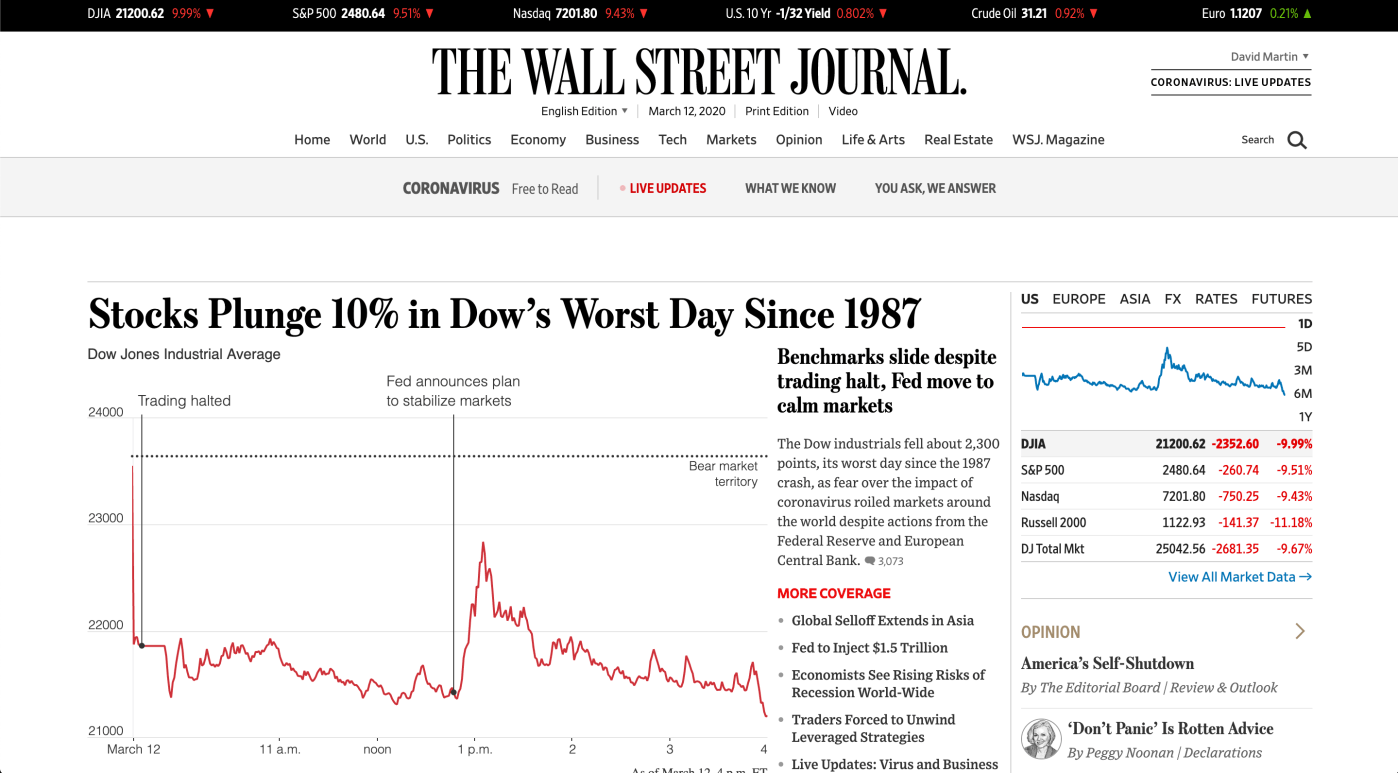
On my second day of mandatory work-from-home, the markets continued their meltdown.  The children were in school, though we are considering keeping them home tomorrow.  A few of the firefighters at the station a mile away tested positive for the virus.  Eli still fenced tonight.  Our regular routine is being dismantled in chunks.  Thankfully, everybody is still healthy.

Purpose

“There’s nothing left,” the old man said.  “You’ve already found them all.”

“Then what should I do next?”

He grinned.  “You can do as you please!”

I thought for a spell, then asked, “Is there anything else to find?”

“Of course,” he said.  “But it’s up to you to decide what’s worth finding.”

“How do I decide?”

“You actually know that already,” he said.

“I suppose you mean there’s no right answer.”

The old man smiled gently.  “What you seek may not matter as much as continuing the search.”


Weight Loss

In January of 2004, I weighed 198 pounds.  I was living in San Francisco, and bicycling a twenty-five mile route almost every day.  In 2005, I moved to Seattle.  Before I moved back to California again in 2007, my weight had gone up to 260 or more pounds.  I could write a lot about the weight gain, but I’ll save it for a different post.

I have been wanting to lose that weight ever since, but haven’t had much luck.  I tried eating a low carb diet.  I signed up for Jumpstart MD, which coached me to eat tiny portions of specific foods.  The most fruitful approach was an aggressive exercise routine, but it also increased my appetite and made weight loss very slow.  I would put on muscle without losing fat.  Lots of exercise is great, but I’m convinced it’s better for helping me maintain a weight than for reducing it.

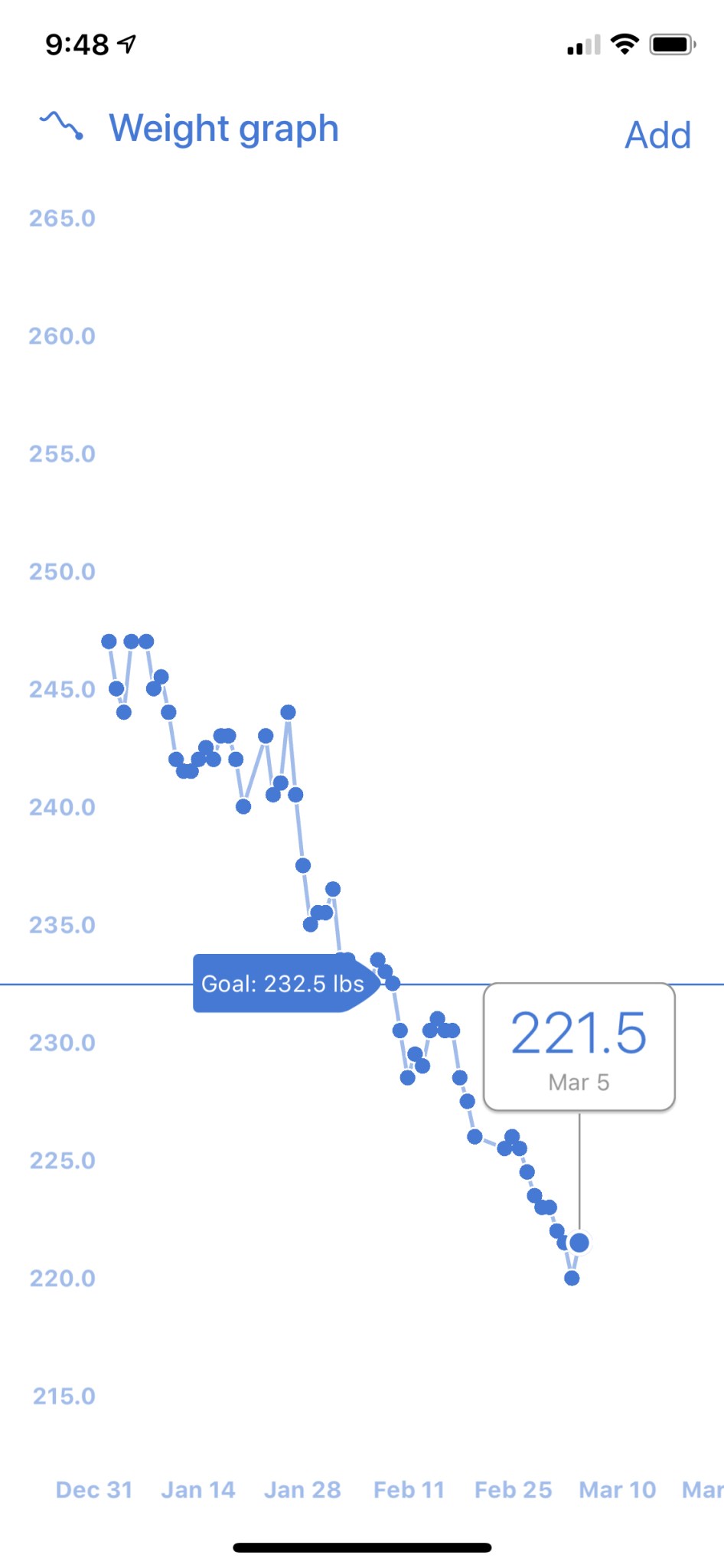
Just before New Year’s 2020, I started a new program.  My starting weight was 247.

IMG_DD9378F17DA4-1

Two months later, and I’ve lost over twenty-five pounds.  This is a little over halfway to my goal.

Success has been surprisingly simple:  counting calories and weighing myself every day.  In time, I discovered that I didn’t need to eat as much as I thought.  I can eat a light dinner — soup, for example — and not struggle with sleeping.  On most days, I have a snack for breakfast, a hearty lunch of meat and vegetables, and a light dinner.  I won’t touch sugar, and I eat carbs sparingly.  I’m still drinking coffee and my diet energy drinks.  I don’t really feel like I’ve had to give up anything.

I have another twenty plus pounds to lose (and keep off), so the journey is not over.  To be continued!

Light in the Darkness

In my dreams, the evil infects me and I can think of nothing else but to infect another.
The first is hard.
I am still weak and we grapple in a dark alley
Before I finally gain a stranglehold and reach into him through his mouth.
The result is loathsome.
He becomes my partner and turns our third
Then fourth victim.
We run as a large gang now, and defeat the police with a grim flourish.
By the time the army is attacking us, we’re an army ourselves.
Nations fall in quick succession.
Oddly, I feel my reservoir of darkness depleting now.
While the world grows darker around me, hardly a soul left waiting to be lost,
My ruinous strength is about to fail.
Finally, a day comes when I can no longer be evil and I turn light:
My first-to-be-saved a young boy I had turned while he was tagging a bridge nearby.
The boys eyes open wide,
And I gesture to him “Hush!”
I dismantle my top lieutenants with his help
And within days the army of darkness is on the run.
We spend weeks hunting down the last of my erstwhile acolytes.
The news has no idea what to report.
The prince of darkness has saved a world that was at the brink.
The planet enters a period of peace and prosperity.
The boy becomes king,
And as I watch on from the crowd they cry: “he saved us!”


I slink away into the shadows.
I capture the remnants of hate and anger, the little I have left,
And box them up with a warning sign.
Then I bury it deep in the earth near my home.


“It’s done.” I say.


“It’s done for now.” a voice says.

Introverts

Some are easily recognized, but others are not.

Some look shy.  Some look brash and self-abandoned.  Some wear smiles or frowns.  Introversion is not about what you see.

Introversion is about what you don’t see. You don’t see the self-critical internal dialogue; neverending that.  You don’t see the fear or the anxiety.  You don’t see the profound need to be by oneself, especially in reaction to being forced to be around others in situations where being oneself would seem damn near impossible.

Develop amnesia, then go to a party with your “friends”.  What is it like, to know but not to know?  What is it like to be alone?

If you don’t know, you’re probably not an introvert.

DOSTOEVSKY’S ‘THE GRAND INQUISITOR’

I’ve always been a fan of Russian literature, though never an expert.   Certain parts of the books I’ve read have stayed with me though.  I am not a careful follower of current events, and this is not to be read as an indictment of Trump.  Nevertheless, it’s all too easy to give up thinking for yourself; all too easy for the people that rule to enable it.  As such, I thought I’d share with you an excerpt from one of Dostoevsky’s greatest works.

From Chapter Five of Dostoevsky’s epic Brothers Karamazov I’ve summarized and quoted parts of ‘The Grand Inquisitor’:

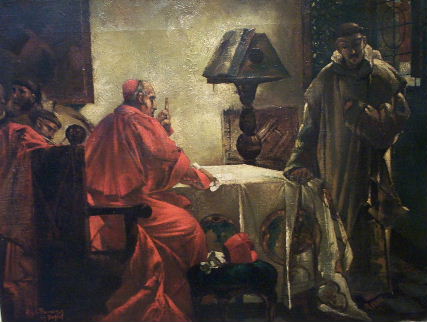
The brother Ivan details the plot of a poem he has yet to write.  In the poem, Jesus reappears in the heart of the Spanish Inquisition, just as Seville’s Grand Inquisitor has burned a hundred heretics at the stake.

On appearance in Seville, the masses immediately recognize Jesus.  He performs some number of miracles, including the resurrection of a small child.  Then he is thrown in prison by the Grand Inquisitor himself.

To his prison cell, in the “deep darkness”, the ninety-year-old Inquisitor comes to Jesus, who stays silent throughout his visit.  While he recognizes his prisoner as Jesus — God in flesh — he tells Jesus that he will burn him at the stake in the morning.

Jesus preached freedom by faith, but didn’t make a hasty return, creating a distinct problem for those early faithful.  After fifteen centuries, the church has solved the problem by managing to convince the people to rely entirely upon faith in the church. Finally, the people see themselves as completely free.  They have laid all of their freedom at the church’s feet by putting their faith entirely in the church’s prescriptions for living.  Now, with the arrival of Jesus, faith is fulfilled, freedom complete.

No, Jesus is messing everything up.  He is going to return everything to confusion.  The Inquisitor points out that if Jesus had fallen to his first temptation (Satan’s admonition to turn some rocks to bread so as to feed his starving self), it would have amounted to buying the people’s freedom — acquiring their faith — with a few loaves of miracle bread.  “Instead of taking over men’s freedom, you increased it and forever burdened the kingdom of the human soul with its torments.” (Pevear and Volokhonsky, 255)

The Inquisitor reiterates by reminding Jesus of his refusal to leap from the heights or to come down from the cross; more temptations that fulfilled would exchange freedom for a kind of faith.  “You did not come down [from the cross] because, again, you did not want to enslave man by miracle and thirsted for faith that is is free, not miraculous.” (256)

Jesus did perform miracles of course, but not until after he survived his temptations in the wilderness (Matthew 4:11 tells that, post-temptation, the devil left him; Matthew 4:17 tells us that it is then he began to preach).  The Grand Inquisitor does not want to let Jesus loose on the world with the prospect that he will again ask people to choose for themselves what to believe, something that still happens even in the presence of miracles, “miracles”, and such.  I don’t know about you, but in the Age of Reason I would be highly suspicious of any dude that turned up appearing to produce the output of an entire bakery’s morning shift using only a single loaf.  But there’s probably a San Francisco startup working on it now.  Pray for it.

The Grand Inquisitor goes on to explain to Jesus that the church has prudently taken steps to capture the people’s faith, despite the lengths to which Jesus had left them free (hanging?) to choose for themselves.  The church’s recipe is miracle, mystery, and authority:    hocus pocus, mumbo jumbo, and auto da fé.  “Then we shall have given them quiet, humble happiness, the happiness of feeble creatures, such as they were created.” (258)

And bread.  Lots of bread.  “For who shall possess mankind if not those who possess their conscience and give them their bread?” (258)

legal-and-right

Courtesy Anarchist Life

Thanks to Mark Addleman.

The Life of DORA

DORA, or “Directly Operational Rational Automata”, was the life work of her creator, Henry Givens.  As a young man, Henry frequently spoke out against the overblown predictions of artificial intelligence.  Talk of the “singularity” — the moment at which computers would achieve human intelligence — reeked of religious faith.  People loved to imagine a future with sentient machines though, and one science-fiction movie after another envisioned a future slightly different from the one before it.  Henry never bothered with the stories in which the machines were our enemies.

It was all a waste of time to Henry.  The answer to artificial intelligence was buried in the story of Helen Keller.  Helen lived in silent darkness.  In time, she learned how to “see” and “hear” through her sense of touch.  The critical moment of her story, appearing in her own autobiography and the biographical play The Miracle Worker, comes when Helen has her hand under a pump, water streaming over it.  Her teacher, Anne Sullivan, signs the word for water repeatedly into her hand.

“We walked down the path to the well-house, attracted by the fragrance of the honeysuckle with which it was covered. Some one was drawing water and my teacher placed my hand under the spout. As the cool stream gushed over one hand she spelled into the other the word water, first slowly, then rapidly. I stood still, my whole attention fixed upon the motions of her fingers. Suddenly I felt a misty consciousness as of something forgotten — a thrill of returning thought; and somehow the mystery of language was revealed to me. I knew then that “w-a-t-e-r” meant the wonderful cool something that was flowing over my hand. That living word awakened my soul, gave it light, hope, joy, set it free !” (The Story of my Life 23)

To Henry, this decisively ruled out the possibility of artificial intelligence.  Computers don’t have bodies.  They don’t get hungry or cold.  They never need to use the bathroom.  And they don’t have senses of any kind.  Sure, you can connect a camera or a microphone to a computer, but the computer will never experience the world through it.  Images and sounds are just streams of symbols, with no outside associations.  It would be as if Anne Sullivan expected Helen to acquire language without the hand under the water pump.  An absence of sensory experience means that language — all its symbols and magic — has no place to point.  What does “water” represent if you don’t know what it feels like to be wet?

From his perch in the ivory tower, Henry became famous for his diatribes against artificial intelligence.  He was regarded as a brilliant computer scientist for his work on the resiliency, compression, and transmission quality of streaming media, a field he decided was practical and commercially relevant enough to guarantee himself a modicum of respect (and the occasional lucrative consulting gig).

And so it came as a surprise when Henry realized that computers knew, or could know, what it meant to be hungry.  Most every machine in Henry’s life, including his car, was now running on batteries.  Batteries wear out.  If a computer could somehow be made aware of imminent shutdown, it might have a motivation to act in response.

Henry bought one of those computers the size of a deck of playing cards and wrote a simple program.  The computer should wish to stay online.  When it detected its battery was low, it should look for a power source.  To start, Henry gave the computer wheels to turn in 360 degrees.  He placed a magnetic power source at some hour of the clock, and the computer program would spin the computer until it found the power source.  When this was too easy, he gave the computer motion along x and y axes.  Finding the power source was decidedly more difficult now, but again the computer came up with a way to “scan” the space, knowing that if Henry had put the power source too far away, it would fail and be shutdown.  The computer quickly grew more sophisticated and efficient at hunting.

Then Henry changed tactics completely.  With the computer uncertain of its power source location, it began looking for one the instant it came online.  Now Henry taught the computer that he would give it a power source when its levels were low.  The computer no longer needed to look for power.   So what would it do?

With only hunger as a sensory input, the computer’s behavior was animalistic.  It had nothing to do but preserve itself.  Henry now gave it a microphone and a speaker.  He taught the program how to differentiate sounds:  separate ambient noise from words, and other discrete sounds.  Then he taught the program the word “power”, and showed it that when it spoke the word “power”, he would plug it in.

But what else did the computer “desire”?  Henry decided to give the computer a preference for getting a response when it spoke.  If the computer made a sound, and Henry was silent in response, then the computer would learn this sound was not provocative.  If the computer said “hello” though, Henry would reply, “Hello Dora!”

In this fashion, Dora learned her name.  In the weeks that followed, Henry taught Dora the word “turn” while he spun her in place: her built-in sensors read the changes to her position and glued the experience to the word.  He also taught her “push” and “pull”.  Then he taught her “good night” and “good morning”.

One “morning”, Dora awoke with a camera.  For weeks, Henry put objects in her line of sight and taught her new words.  Dora’s favorite part of having a camera was that she could now see her power source just by scanning for it visually.  Dora could feed herself now.

To be continued…


Blog at WordPress.com.

Up ↑